
On 21 October, OpenAI switched on ChatGPT ads in 26 more countries, and South Africa was one of them. Businesses here can now pay to appear in ChatGPT, through OpenAI’s own Ads Manager or one of its technology partners.
That’s a big change. Until now, the only way into a ChatGPT answer was to earn it. It’s also very new, and much of what local advertisers would want to know hasn’t been published yet. Here’s what we know so far, and how we’d approach it.
What a ChatGPT ad looks like
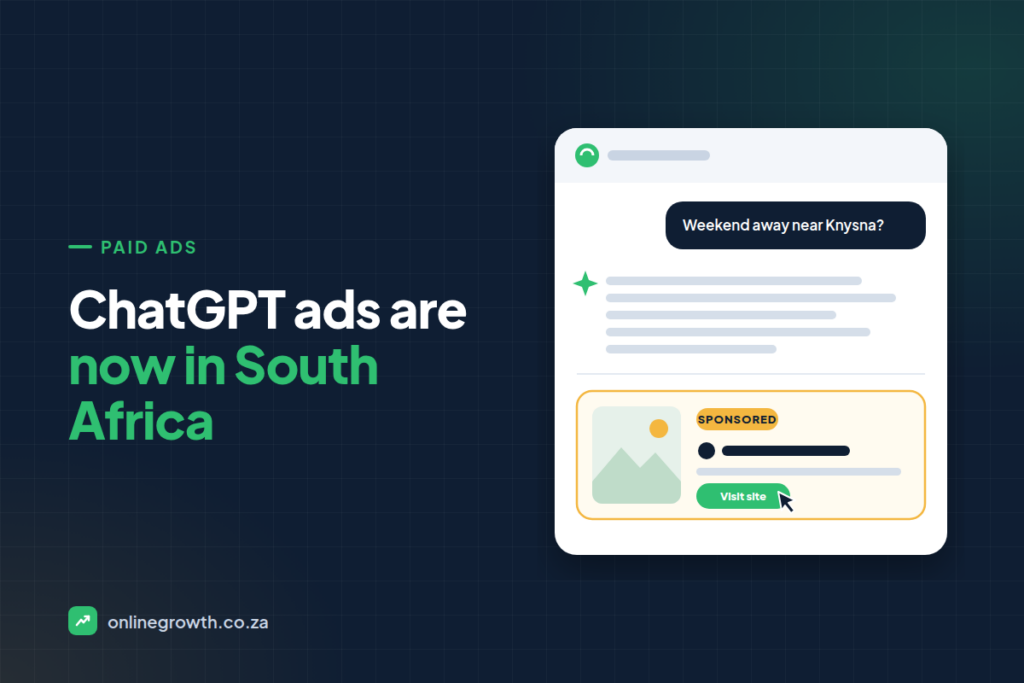
When someone asks ChatGPT something with a buying angle, such as comparing running shoes, planning a weekend away or choosing accounting software, a sponsored listing can appear underneath the answer. It’s labelled as sponsored and kept visually separate from the answer itself.
The ad is small. There’s your business name and icon, a short headline, a line of copy, an image and a link. Think of it as closer to a Google search ad than a banner.
Who sees them, and who doesn’t
Ads only show to people on ChatGPT’s Free and Go plans. Plus, Pro, Business and Enterprise users don’t see them. That still covers most ChatGPT users, because the majority use it for free.
OpenAI has also set some limits:
- No ads for users who say they’re under 18 or whom OpenAI predicts are.
- No ads near sensitive or regulated topics, including health, mental health and politics.
- Advertisers never see people’s conversations. You get aggregate figures, like impressions and clicks, not chat content.
- OpenAI says ads don’t influence what ChatGPT says in its answers.
The health exclusion matters for a lot of our clients. If you run a medical, dental or allied health practice, don’t expect to buy your way into ChatGPT conversations about symptoms or treatments. Organic visibility, which we cover in our guide to marketing a medical practice, is still the route there.
How targeting works
This is the part that’s genuinely different from Google Ads. ChatGPT ads don’t run on keywords. You describe the situations your ad suits, which OpenAI calls context hints, and ChatGPT matches ads to conversations using those hints, your ad copy and your landing page.
So instead of bidding on “accounting software South Africa”, you’d describe the moment: a small business owner comparing cloud accounting tools, someone moving off spreadsheets, a bookkeeper looking for payroll features. The better you understand the questions your customers ask before they buy, the better this works.
In the markets where Ads Manager has been running longer, you can also upload customer lists to target or exclude, and track conversions with a pixel or a server-side connection, much as you would on Meta or Google. You pay per click or per thousand impressions, and self-serve accounts have no minimum spend. Expect South Africa to work the same way, but check what’s switched on for your account.
What we don’t know yet for South Africa
OpenAI hasn’t published local pricing, and there’s no public rate card for any country. A few other things are worth confirming before you put real money in:
- Whether you can be billed in rand, or only in dollars
- How precise location targeting is. For a business serving one town or suburb, this decides whether it’s usable at all
- How many South Africans on Free and Go will actually see ads in your category
- Which ad formats and objectives are available here, as OpenAI says more are coming
Customer-list audiences also need a large number of matched users before they’ll run, which puts them out of reach for most small local businesses for now.
Who should test it first
Early on, ChatGPT ads look best suited to businesses that sell to a wide area and to people who research before buying:
- Online stores, especially for products people compare
- Tourism and hospitality, since travellers plan trips with AI
- Software, B2B services and professional firms that work nationally
- Higher-value purchases like furniture, vehicles, education and home improvements
They look less suited, for now, to very local service businesses (until location targeting proves itself), anything health-related, and businesses that need every rand of a small budget to produce leads this month.
If you want to try it
Treat it as a test, not a channel switch. Keep your Google, Microsoft and Meta campaigns running, and set aside a budget you’re comfortable spending to learn something.
- Set up conversion tracking before the first ad goes live. Without it, you’ll only know clicks, not enquiries or sales.
- Write your context hints from real customer questions, the ones you hear on the phone and in your inbox.
- Send people to a page that answers the question they were asking, not your homepage.
- Run it for long enough to get meaningful numbers, then compare cost per enquiry or sale with your other channels.
Ads don’t replace being recommended
Paying for a sponsored slot under an answer is not the same as being named in the answer. OpenAI keeps the two separate, so an ad campaign won’t get ChatGPT to recommend you. Organic recommendations still come from consistent business details, good reviews, clear service pages and mentions on other credible sites. We explain how that works in Is ChatGPT recommending your competitors? and the new SEO playbook.
The businesses likely to do best are the ones doing both: earning a place in the answer, and testing ads where they make commercial sense.
We already run ads across Google, Microsoft and all the main social platforms, and we’re adding ChatGPT to that mix for clients where it fits. If you’d like to know whether it’s worth testing for your business, tell us what you sell and where.
Common questions
Can I advertise on ChatGPT from South Africa? Yes. South Africa was added on 21 October 2026, and advertisers can sign up through OpenAI’s Ads Manager or its technology partners.
Will an ad make ChatGPT recommend my business? No. OpenAI says ads don’t affect ChatGPT’s answers. The ad appears separately, below the answer, and is labelled as sponsored.
Can medical practices advertise on ChatGPT? Ads aren’t shown near health and mental health topics, so practices are unlikely to reach patients this way for now. Organic visibility is the better investment.
Does OpenAI share my customers’ conversations with advertisers? No. Advertisers only get aggregate reporting such as impressions, clicks and conversions.
